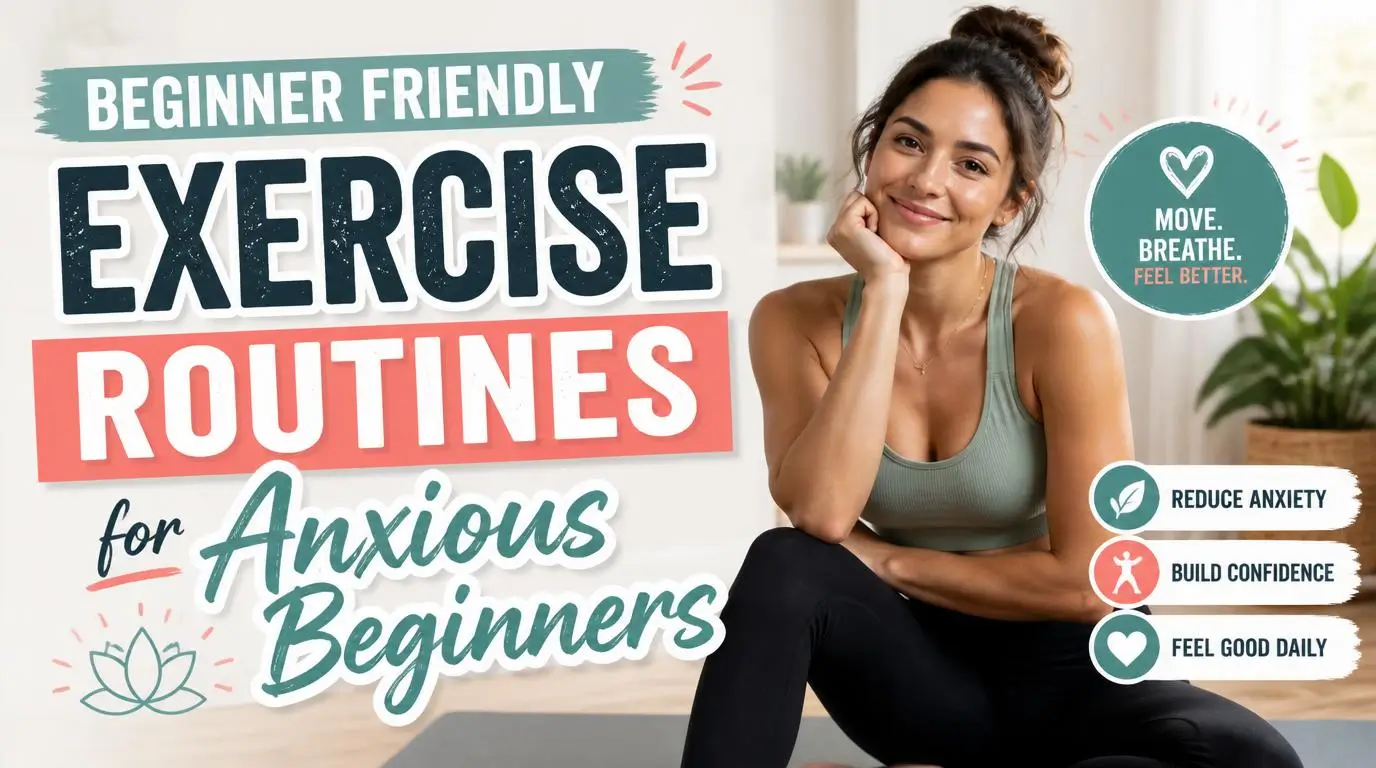
Finding beginner friendly exercise routines for anxious beginners felt impossible when I first started. My heart would race just thinking about a gym. The idea of someone watching me fumble through a squat made me want to crawl back into bed. I spent three years avoiding exercise entirely because anxiety convinced me I would embarrass myself. Then I found routines that worked with my brain instead of against it. Everything shifted. This guide is exactly what I wish someone had handed me back then.
Why Traditional Fitness Advice Fails Anxious People
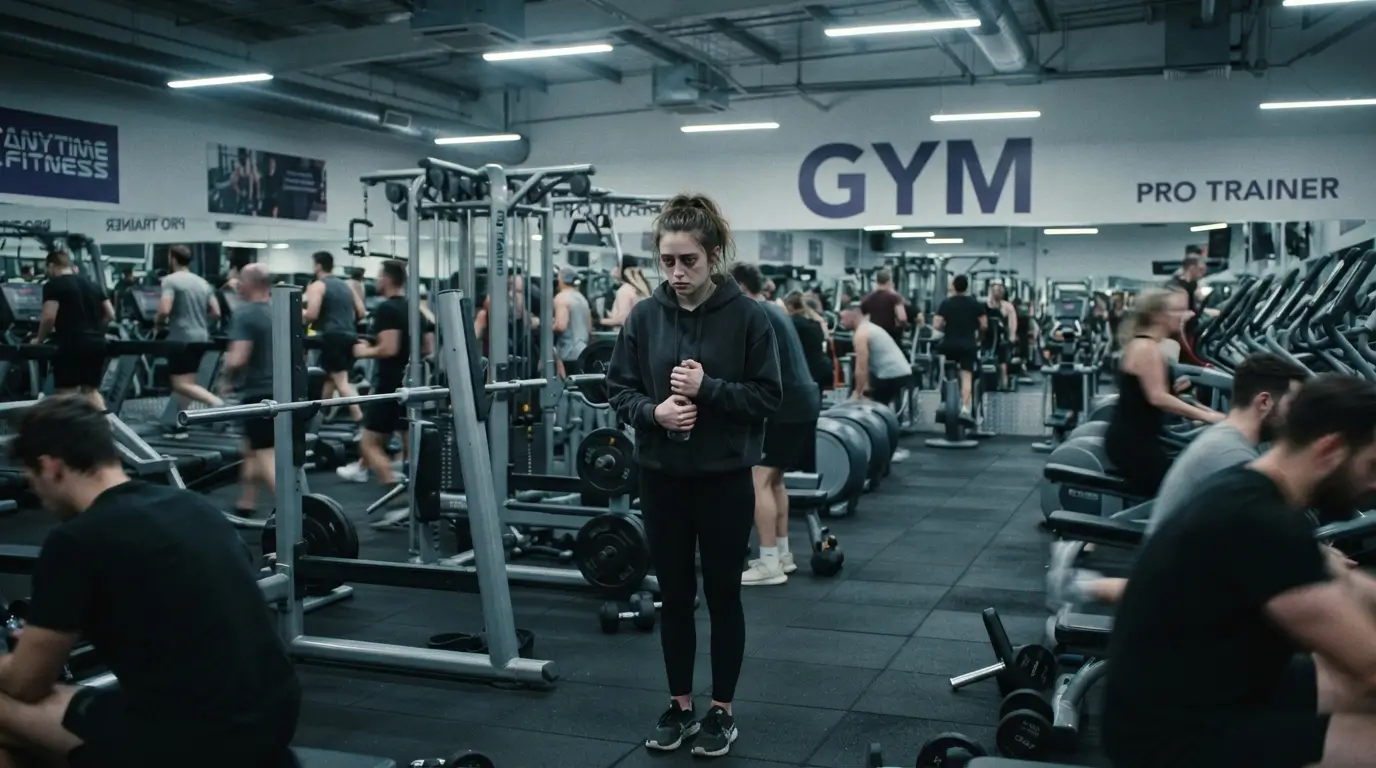
Most workout programs assume you are just lazy or unmotivated. They throw you into 30-day challenges and group classes like those are easy starting points. Gym memberships get pushed the same way. For someone with anxiety, they are not easy. They are walls.
Also Read: Best Fitness Tracker Under $100 for Beginners
I tried a popular HIIT program once. Within five minutes my elevated heart rate triggered a panic response. I could not tell the difference between a good cardio burn and something being seriously wrong. That was the last time I exercised for about eight months. The problem was not my body. Nobody told me anxiety changes how your nervous system interprets physical sensations. A racing heart during burpees feels identical to a panic attack when your brain is already on high alert.
Traditional fitness advice also leans heavily on accountability through social pressure. People tell you to bring a friend or join a class. They want you to post your progress online. For anxious beginners that is a recipe for avoidance. We need the exact opposite. We need privacy. We need control. We need permission to go slow.
Start With Walks, Not Workouts
I know walking sounds too simple. I rolled my eyes at this advice too. But a 10-minute walk around my neighborhood became the single most important habit I built. It works for anxious people for a specific reason.
Walking keeps your heart rate low enough that it will not mimic panic symptoms. You control the pace. You pick the route. You decide how long you go. There is no performance element. Nobody is grading your walking form. You can pop in headphones with a podcast and just exist in motion.
I started with evening walks because fewer people were outside. That mattered to me at the time. Some weeks I walked five days. Other weeks I managed just once. Both were completely fine. After about three weeks I noticed my baseline anxiety dropped slightly on walking days. That tiny shift gave me enough motivation to try the next step.

A Quick Walking Framework That Helped Me
Week one involves walking for 10 minutes at any pace. Pick any time that works. Week two bumps that to 15 minutes. Week three adds one gentle hill or a slightly faster pace for 2 minutes in the middle. Skip the tracking apps. Skip the step goals. Just move.
Beginner Friendly Exercise Routines for Anxious Beginners at Home
Working out at home removed about 80% of my exercise anxiety overnight. You skip the commute. You avoid the locker rooms. You deal with zero strangers. It is just me, my living room floor, and a YouTube video I can pause whenever I need to.
The routines that worked best shared a few traits. They stayed under 20 minutes. They were low impact. The instructors had calm energy. I gravitated toward Yoga With Adriene on YouTube because she talks like an actual human instead of a drill sergeant. Her “Yoga for Anxiety” series felt like it was made for people like me. There is no pressure to nail every pose. She gives lots of breathing cues. I could do it in pajamas.
Beyond yoga I found that simple bodyweight circuits done at my own pace made a huge difference. Five squats. Five wall push-ups. Hold a 20-second plank. Rest as long as I needed. Repeat that twice. That is the entire routine. The whole thing took maybe seven minutes. I felt accomplished instead of overwhelmed.
If yoga is not your thing, look into low-impact routines from channels like Grow With Jo. The Nike Training Club app has a solid free tier with beginner filters too. The key is choosing something you can do barefoot in your living room without anyone watching.
Breathing Before Moving: The Step Nobody Talks About
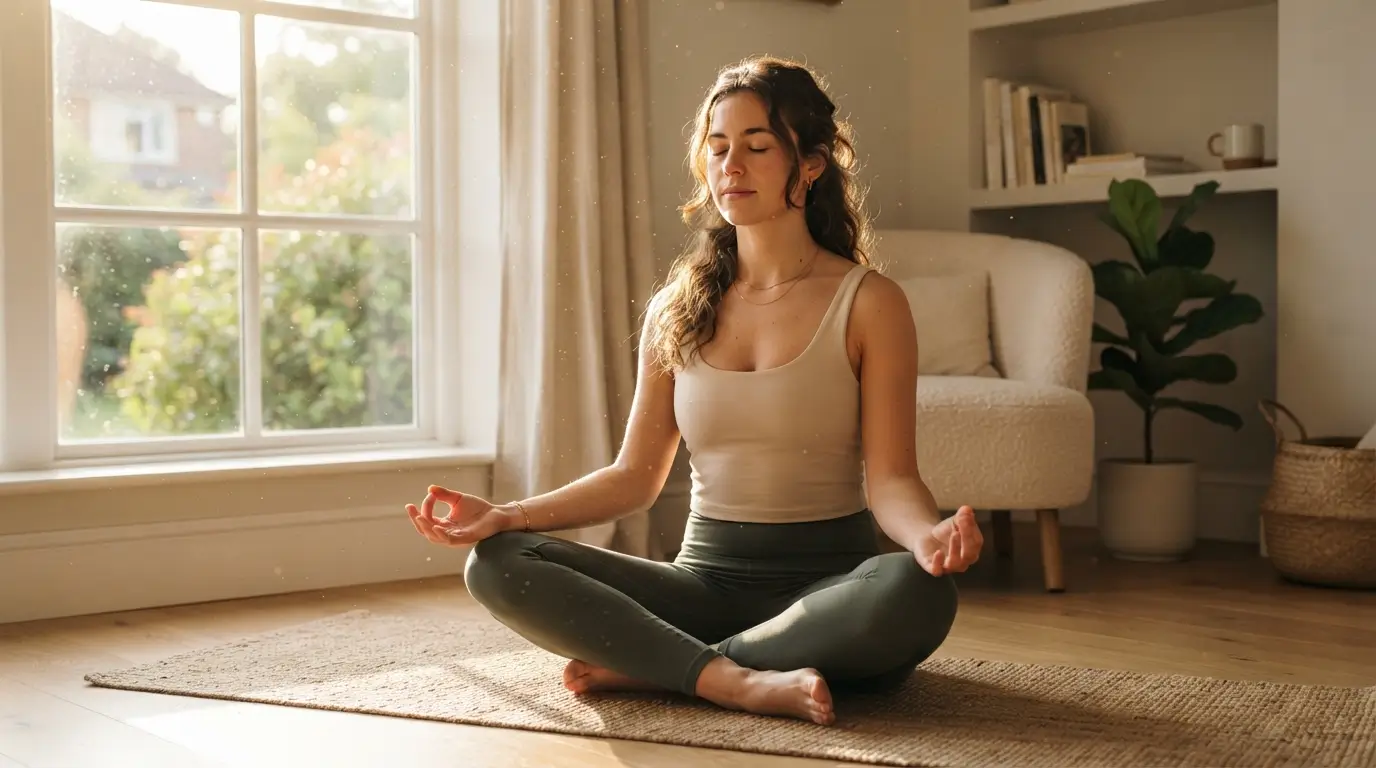
This changed everything for me. Before any workout I spent two minutes doing box breathing. You inhale for four counts, hold for four, exhale for four, and hold for four again. It sounds overly simple. It actually downregulates your nervous system before you start moving. When your heart rate rises from exercise your brain is less likely to interpret it as danger.
I learned this trick from a therapist. She explained that anxious people often jump into exercise while already in a slightly activated state. Adding physical stress on top of mental stress creates a feedback loop that feels terrible. The breathing acts like a reset button.
On days when even the breathing felt hard I gave myself permission to stop there. Sometimes two minutes of intentional breathing was the whole workout. That still counted. Training your nervous system to calm down is exercise for your brain. It builds the foundation for everything else.
Try Resistance Bands Before Weights
Free weights intimidated me for years. I did not know the right form. I was afraid of hurting myself. I imagined everyone at the store judging me for buying 5-pound dumbbells. Resistance bands solved all of that.
Also Read: Do Resistance Bands Actually Build Muscle?
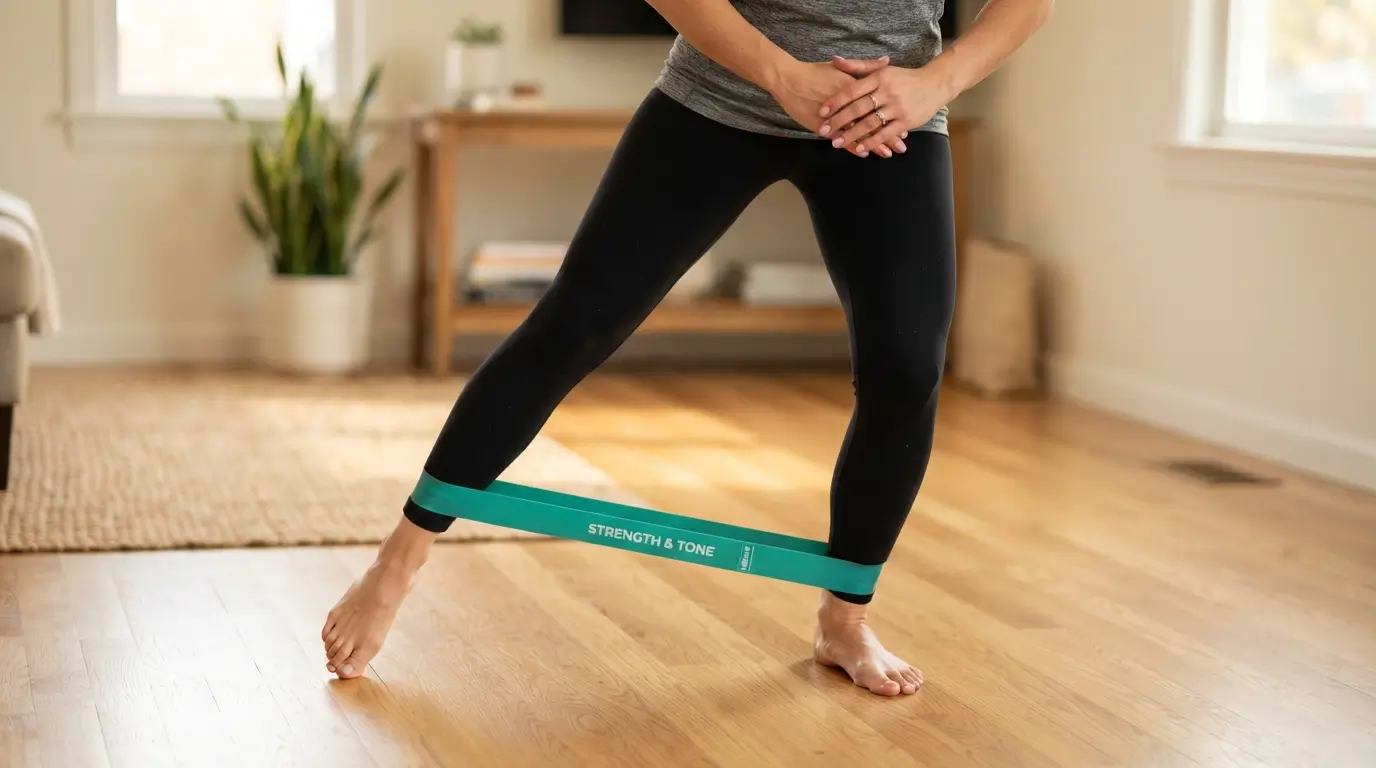
A basic set from Amazon gave me enough variety to work every major muscle group at home. I bought the Fit Simplify brand for about $12. The bands are quiet. They are small. There is almost no way to hurt yourself with a light band. I would loop one around my thighs and do lateral walks while watching TV. I would anchor one to a door handle and do rows. Nothing fancy.
The beauty of bands is that the resistance increases gradually as you stretch them. There is no sudden heavy load on your joints. For someone whose anxiety already makes their muscles tense, that gentle progression feels safe. I used bands exclusively for about two months before I ever touched a dumbbell. By then the movement patterns felt natural enough that weights were not scary anymore.
The “Two-Minute Rule” That Kept Me Consistent
Consistency was my biggest struggle. I would have a great week and then skip four days. The thought of working out made me anxious. That anxiety made me feel guilty. The guilt made me more anxious. It is a classic spiral.
A friend mentioned the two-minute rule from James Clear’s book Atomic Habits. I adapted it for exercise. The rule is simple. On days when you do not want to work out, commit to just two minutes. Put on your shoes and do two minutes of stretching. That is the whole commitment.
Most days I would start and keep going for 10 or 15 minutes. Even when I genuinely stopped at two minutes I maintained the habit loop. My brain still registered that I exercised today. Over time the anxiety around starting faded because two minutes never felt threatening. This single strategy kept me going when nothing else did.
When You’re Ready: Low-Anxiety Gym Options
You might never want to go to a gym. That is completely valid. If you are curious, some options are significantly less overwhelming than others.
Planet Fitness markets itself as a judgment-free zone. My experience there actually matched that promise. The atmosphere is casual. Most people are beginners. Nobody cares what you are doing. I went at 6 AM on weekdays when the place was nearly empty. That helped enormously.
Another option is small studio classes with a cap on attendance. I tried a beginner Pilates class limited to eight people. The intimacy actually made it less anxiety-inducing than a packed room. The instructor noticed me and gave gentle corrections. I was not left guessing if I was doing something wrong.
Group settings might be too much right now. Some gyms offer off-peak day passes so you can test the waters without committing to a membership. I did this three times before signing up anywhere. I have no regrets about taking it slow.
Tracking Progress Without Obsessing
Fitness culture loves metrics. People track their steps and calories. They obsess over heart rate zones and body measurements. For anxious people, tracking can become a compulsion fast. I fell into that trap with a Fitbit. I found myself checking my heart rate 30 times a day and panicking when it spiked.
I switched to a simple journal instead. After each workout I wrote one sentence about how I felt. I would jot down things like feeling calmer after a 15-minute walk or noticing my shoulder tension went down after yoga. Some days I just wrote that I managed two minutes but showed up. That was it.
Also Read: Best Budget Dumbbells for Home Workouts
This kind of qualitative tracking kept me focused on the emotional benefits of exercise rather than performance metrics. Over three months I could flip back through the journal and see a clear pattern. I felt better on days I moved. That evidence was more motivating than any step count ever was.
FAQs
What are the best beginner friendly exercise routines for anxious beginners who hate gyms?
Walking and home yoga are your best starting points. Short bodyweight circuits work well too. YouTube channels like Yoga With Adriene and Grow With Jo offer free routines with a calm pace you can do in your living room. You need no equipment. You have no audience. There is no pressure. Start with 10 minutes or less and build from there only when it feels right.
Can exercise actually make anxiety worse?
It can if you push too hard too fast. High-intensity workouts raise your heart rate dramatically. That can trigger panic-like symptoms in anxious people. Stick with low-impact movement and always do a few minutes of breathing beforehand. The goal is to teach your nervous system that a faster heartbeat is safe.
How often should I exercise if I have anxiety?
There is no magic number. Three to four days a week is a solid goal but even once a week matters. Consistency beats intensity every time. If you skip a few days just start again without guilt. The worst thing you can do is turn exercise into another source of stress.
What if I feel too anxious to even start a workout?
Use the two-minute rule. Tell yourself you only have to do two minutes of stretching or walking. Most of the time starting is the hardest part. You will naturally keep going. If you stop at two minutes that still counts. You showed up. That matters more than duration.
Should I tell my therapist I’m starting to exercise?
Yes. A therapist can help you set realistic expectations and work through any anxiety that comes up around exercise. They might also suggest specific techniques like box breathing or grounding exercises that pair well with physical activity. Exercise and therapy work best as a team.
Conclusion
Starting to exercise with anxiety is not about pushing through fear or forcing yourself into uncomfortable spaces. It is about finding the smallest possible movement that feels safe and building from there one two-minute session at a time. What was your first step back into movement? What has been holding you back?